How I Took Control of My Anxiety – And How You Can Too (Proven Techniques & Tools)

Struggling with anxiety? Here’s how I stopped letting it control my life – and how you can too!

🛑 Do you constantly overthink past conversations?
😨 Does your brain spiral into “what-if” scenarios at the worst moments?
💭 Wish you could quiet your anxious thoughts and feel at peace?

You’re not alone. Anxiety affects millions of people—but the good news is, you don’t have to let it rule your life. After years of struggling, I discovered 7 science-backed strategies that helped me break free. Today, I’m sharing them with you—along with some of my favorite tools that actually work.

(Affiliate Disclosure: This post contains affiliate links. As an Amazon Associate, I earn from qualifying purchases, at no extra cost to you.)

Step 1: Call Out Anxiety for What It Is

Anxiety thrives in the shadows. It makes you believe irrational thoughts are facts, but the moment you call them out—they lose power.

💡 Try this:

  • When you catch yourself spiraling, say: “Oh, so now I’m going to be homeless because I sent an email with a typo? That’s a stretch!”
  • Say your anxious thoughts out loud to make them feel ridiculous.

🔹 Game-Changing Tool for Anxiety:
The Anxiety Workbook: A 7-Week Plan to Overcome Anxiety & Stress – This book helped me identify anxious thought patterns and break free from them
Step 2: The ‘What’s the Worst That Can Happen?’ Trick

Anxiety tricks you into thinking the worst-case scenario is catastrophic. But 99% of the time, it’s not that bad.

💡 Ask yourself:
👉 “If this goes wrong, what’s the worst that will actually happen?”

😅 Example: I once had a panic attack before a work presentation, convinced I’d embarrass myself. Reality? No one cared. People clapped, and life moved on.

🔹 Boost Your Confidence Before Stressful Events
Magnesium Glycinate Supplement – Science-backed support for relaxation and stress relief.

Step 3: The 5-4-3-2-1 Anxiety Grounding Technique

When anxiety traps you in your head, this simple exercise helps bring you back to the present moment.

Try this now:

1️⃣ Name 5 things you see (Laptop, coffee mug, window…)
2️⃣ Name 4 things you can touch (Desk, sweater…)
3️⃣ Name 3 things you can hear (Birds, fridge humming…)
4️⃣ Name 2 things you can smell (Coffee, laundry detergent…)
5️⃣ Name 1 thing you can taste (Mint gum…)

🔹 My Go-To Anxiety Relief Tools
Calm App for Guided Meditation – Life-changing for daily relaxation.
Aromatherapy Diffuser with Lavender Oil – Helps me sleep better and feel calmer instantly.

Step 4: Stop Giving Anxiety VIP Treatment

Would you let an annoying backseat driver dictate your every move? No? Then why let anxiety do it?

💡 Try this mental trick:

This helps you detach from them emotionally instead of believing them.

Imagine your anxious thoughts in a ridiculous cartoon voice (like a dramatic soap opera villain).

🔹 Must-Have for Overthinkers
The Overthinker’s Journal: A Guided Workbook – Helps you reframe anxious thoughts so they don’t control you.

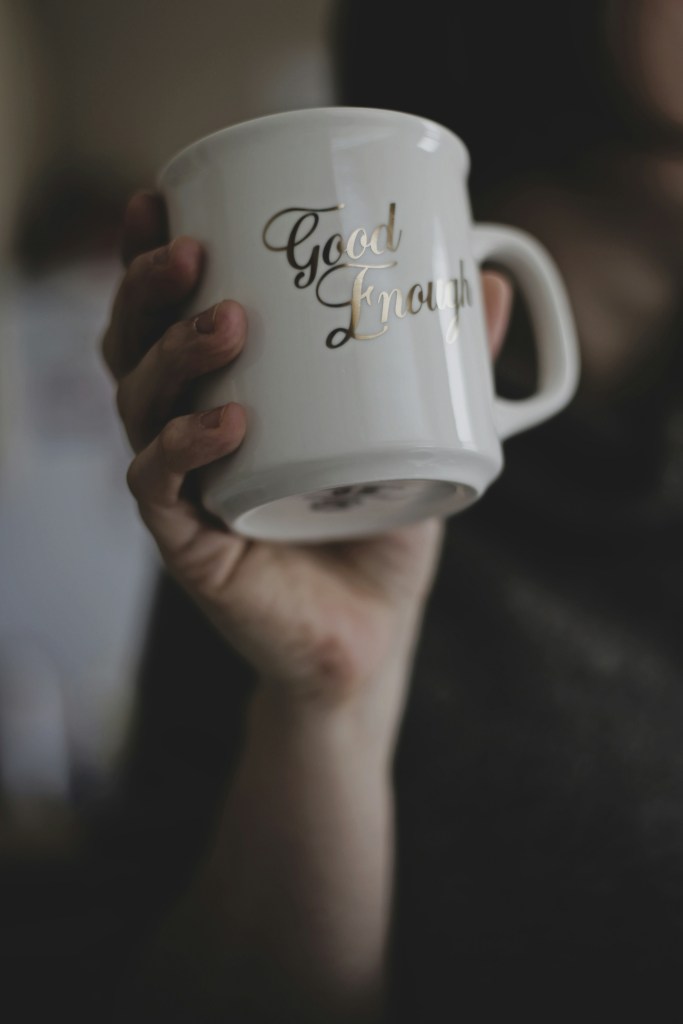
Step 5: The ‘Good Enough’ Rule (How I Stopped Overthinking Everything)

Anxiety and perfectionism go hand in hand. They convince you that if something isn’t perfect, it’s a failure.

💡 The solution? Embrace “good enough.”

I used to spend hours rewriting emails—now, I hit send and move on.

Instead of obsessing over every detail, let 80% be enough.

🔹 If You Struggle with Perfectionism, Read This:
The Gifts of Imperfection by Brené Brown – A must-read for recovering perfectionists!

Step 6: Move Your Body (Even When You Don’t Want To)

I hate to say it, but… exercise really does help.

🏃‍♂️ Why?
✔ It burns off excess adrenaline.
✔ It forces you to focus on the present.
✔ It interrupts anxious thought patterns.

Even a 5-minute walk or dancing like a fool in your kitchen can work wonders.

🔹 Best Tools for Movement & Anxiety Relief
Yoga Mat for Daily Stretching – A simple habit that changed my life.
Under-Desk Walking Pad – Great for moving while working from home.

Step 7: The Power of Saying ‘No’

🔹 Did you know? Overcommitment fuels anxiety.

The more you say yes to things that drain you, the worse your anxiety gets.

💡 Try this sentence:
“I appreciate the invite, but I won’t be able to make it.”
👉 No over-explaining. No guilt. Just a simple, powerful NO.

🔹 Set Boundaries with Confidence
Set Boundaries, Find Peace – A Life-Changing Book – If saying “no” is hard for you, this book is a must.

Final Thoughts: Anxiety Doesn’t Get to Win

Anxiety is part of life, but it doesn’t control you. The more you challenge it, the less power it has.

💡 Remember:
✅ You are not your anxiety.
✅ You are strong, capable, and worthy of peace.
✅ And next time anxiety knocks? Politely decline the invitation.

🔥 What’s one anxiety tip that has helped you the most? Let me know in the comments!

Managing and Accepting Anxiety: How I Found Inner Peace (And You Can Too)

Struggling with anxiety? Here’s how I stopped fighting it and started living with peace.

💭 Do you feel like anxiety is running your life?
😨 Constant overthinking, racing thoughts, and stress taking over?
🛑 Wish you could break free from anxiety’s grip and feel at peace?

If so, you’re not alone. For years, I fought anxiety like it was an enemy—but I finally realized the key wasn’t to fight it, but to understand and accept it. In this guide, I’ll share science-backed strategies and tools that helped me regain control of my mind.

(Affiliate Disclosure: This post contains affiliate links. As an Amazon Associate, I earn from qualifying purchases, at no extra cost to you.)

Step 1: The Illusion of Control – Why Fighting Anxiety Doesn’t Work

For years, I thought I needed to control every thought and emotion to beat anxiety. I believed that if I planned enough, analyzed enough, or was “strong enough”, I could finally get rid of it.

🚨 But here’s the truth:
❌ The more I fought anxiety, the stronger it became.
❌ The more I tried to control every situation, the more anxious I felt.
❌ The more I overanalyzed, the more trapped I became.

👉 The breakthrough moment: A friend asked me, “What if you just let it be? What if you stopped trying to control anxiety and just observed it?”

That question changed my life.

Step 2: Learning to Sit with Anxiety (Instead of Running from It)

At first, the idea of “just letting anxiety be” seemed terrifying. What if it consumed me? What if I never felt normal again?

But I decided to try. Instead of distracting myself, I sat with my anxiety. My heart pounded, my mind raced—but guess what? Nothing bad happened.

💡 What I learned:
✅ Anxiety isn’t dangerous—it’s just uncomfortable.
✅ Avoiding it only makes it stronger.
✅ The more you observe anxiety, the less power it has.

🔹 Game-Changing Tool for Anxiety Relief
The Anxiety and Phobia Workbook – A science-backed guide to breaking free from anxiety’s grip.

Step 3: The Science Behind Anxiety – Why Your Brain Reacts This Way

Anxiety isn’t just “all in your head”—it’s actually a biological response. When your brain perceives a threat (real or imagined), it activates the amygdala, a part of the brain responsible for fear and emotions.

🔹 Why does this happen?

  • Your brain is wired for survival, not happiness.
  • When it detects a possible threat, it releases stress hormones like cortisol and adrenaline.
  • These hormones increase heart rate, breathing, and alertness—preparing you for “fight or flight.”

👉 The problem?
In modern life, our brains often misinterpret non-threatening situations (like emails, social interactions, or public speaking) as dangerous, causing unnecessary anxiety.

🔹 How to calm your brain’s anxiety response?
Deep breathing techniques – Slows down heart rate & signals safety to the brain.
Cold water exposure – Splashing cold water on your face activates the vagus nerve, reducing anxiety.
Meditation & mindfulness – Retrains the brain to stay in the present moment.

📖 Book Recommendation: The Anxiety Cure: Neuroscience-Based Strategies to Calm Your Mind

Step 4: How Nutrition Affects Anxiety – Best & Worst Foods

Did you know that what you eat directly impacts your anxiety levels? Certain foods increase stress hormones, while others promote calmness and mental clarity.

🥑 Best Foods to Reduce Anxiety:

Magnesium-rich foods: Almonds, spinach, avocado (reduces stress hormone production).
Omega-3 fatty acids: Salmon, walnuts (supports brain health & reduces inflammation).
Probiotics: Yogurt, kimchi, kombucha (gut health is linked to anxiety levels).

⚠️ Worst Foods That Trigger Anxiety:

Caffeine: Increases heart rate & mimics anxiety symptoms.
Sugar & processed foods: Spikes blood sugar, leading to mood crashes.
Alcohol: Initially relaxing, but disrupts sleep & worsens anxiety long-term

🔹 If You Struggle with Anxiety, Consider These Supplements:
Magnesium Glycinate – Supports Relaxation
Ashwagandha – Natural Anxiety Reducer

Step 5:The Power of Movement and Routine

While mindset shifts were crucial, I also found that managing anxiety required action. Regular movement, whether it was a brisk walk, yoga, or a full workout, made a noticeable difference in my anxiety levels. Exercise burns off excess stress hormones and gives anxious energy somewhere to go.

Equally important was building a grounding routine. Simple habits—getting enough sleep, eating well, journaling, limiting caffeine—helped stabilize my nervous system. It’s amazing how much better you handle stress when your basic needs are met.

Step 6:The Role of Social Connections

One thing I learned along the way is that isolation makes anxiety worse. When I kept my struggles to myself, they seemed insurmountable. But when I started opening up—talking to a friend, joining a support group, or even just sending a text that said, “Hey, I’m having a rough day”—something shifted.

Human connection has a powerful grounding effect. It reminds us that we’re not alone, that others have walked this path and come out stronger. Even in moments of deep anxiety, knowing that someone understands and supports you can be a lifeline.

Step 7:Letting Go of Perfectionism

One of my biggest breakthroughs was realizing that I didn’t have to do this perfectly. Some days, my anxiety was mild. Other days, it felt like a tidal wave. And that’s okay. Healing isn’t linear.

I used to beat myself up whenever I had a setback, thinking, “I should be over this by now.” But progress isn’t about never feeling anxious again—it’s about handling anxiety with more awareness and self-compassion.

Step 8:Finding Joy Amidst Anxiety

For a long time, I thought I had to wait until my anxiety was “fixed” before I could truly enjoy life. But one of the most liberating things I learned was that joy and anxiety can exist together.

I started seeking out moments of joy even on anxious days—watching a funny movie, playing my favorite music, spending time with loved ones. Anxiety might have been present, but it didn’t have to dictate my entire experience.

Step 9:Tools That Helped Me Along the Way

Through trial and error, I discovered tools that made a big difference in my journey:

  • Breathing Techniques: Box breathing (inhale for 4 seconds, hold for 4, exhale for 4, hold for 4) became a lifesaver.
  • Gratitude Journaling: Writing down three things I was grateful for daily shifted my mindset.
  • Cognitive Behavioral Therapy (CBT): Identifying and challenging anxious thought patterns helped me reframe my perspective.
  • Limiting Screen Time: Reducing social media and news consumption prevented unnecessary triggers.

Final Thoughts: Making Peace with Anxiety

Making Peace with Anxiety

🌿 Anxiety does not define you.
🌿 You don’t have to eliminate anxiety to live a full life.
🌿 You are stronger than your anxious thoughts.

👉 Next time anxiety comes knocking?
Acknowledge it, observe it, and remind yourself—you are in control.

🔥 What’s one thing that has helped you manage anxiety? Let me know in the comments!